

I’ve gone through the full content about the EWC 2026 Club Championship and here is an extensive summary that captures the core ideas, key details, and overall sense of the original material. My aim is to preserve every brand name, unique keyword, date, and numeral while presenting a cohesive, engaging overview of what this championship is setting up for 2026.
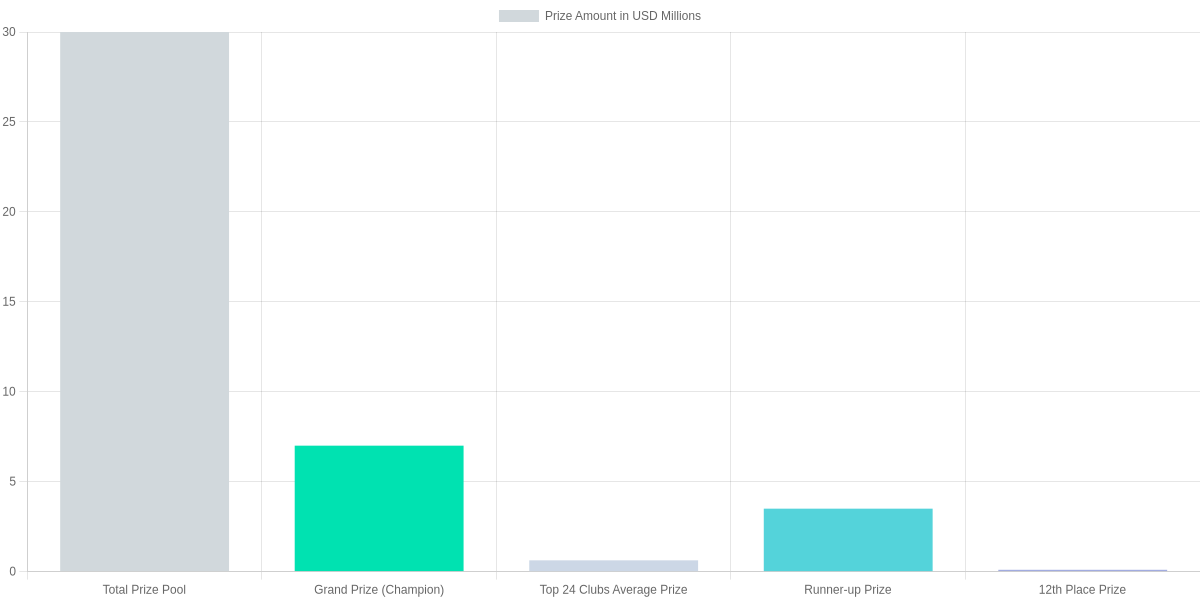
The Esports World Cup Club Championship (EWC) 2026 marks a major, summer-focused return with a $30,000,000 prize pool—up from $27,000,000—highlighting its stature as the world’s premier multi-title club competition. The top prize alone reaches $7,000,000, distributed among the top 24 clubs on the leaderboard.
New rules sharpen the competitive edge: organizations can register up to four players for solo titles and one team per game for team titles. Every club’s performance across diverse EWC events counts toward this dynamic, season-long race, making every tournament critical.
Significant Financial Stakes
I’ve gone through the full content about the EWC 2026 Club Championship and here is an extensive summary that captures the core ideas, key details, and overall sense of the original material. My aim is to preserve every brand name, unique keyword, date, and numeral while presenting a cohesive, engaging overview of what this championship is setting up for 2026.
The Esports World Cup Club Championship (EWC) 2026 comes with a record $30,000,000 prize pool, an increase from the previous $27,000,000. This substantial growth signals the organizers’ intent to elevate the competition’s prestige and attract top-tier esports organizations worldwide. At the apex of the prize distribution is the $7,000,000 grand prize awarded to the ultimate champion, a figure that alone dwarfs many standalone esports tournaments.
Prize money flows down through the top 24 clubs on the leaderboard, ensuring that consistent performance across multiple tournaments and titles is richly rewarded. On average, clubs placing within this elite group vie for prizes that reinforce their season-long competitiveness and strategic planning.
The championship employs a dynamic point system: each 1st place in any tournament grants 1,000 points, with descending points awarded down to 8th place. This design injects a constant flux into the leaderboard standings, making every game contribute meaningfully to club rankings across multiple esports, including team and solo titles. Such a system emphasizes the value of sustained excellence rather than one-off victories.
However, these financial stakes bring considerable pressure. The complex point allocation and prize distribution might challenge new fans’ comprehension. Moreover, clubs must respect roster and registration deadlines to remain eligible for points and prize money, adding administrative responsibilities to their competitive endeavors.
Financial Stakes Overview
✓ Pros
- + Record $30,000,000 prize pool raises the championship’s prestige
- + $7,000,000 grand prize motivates elite clubs extensively
- + Prize distribution to top 24 clubs rewards consistent performance
- + Dynamic points system keeps leaderboard competitive and engaging
✗ Cons
- − High financial stakes increase pressure on clubs
- − Complex points system may confuse new fans
- − Roster and registration requirements tied to prize eligibility add administrative burden
Roster Limitations and Strategic Considerations
The EWC 2026 Club Championship introduces new roster rules that demand careful strategic planning from organizations. For solo titles, clubs may register up to four players, while team titles like League of Legends and Counter-Strike 2 have specific limits varying by game. Substitution regulations, roster lock dates, and maximum active players per match differ significantly and shape club tactics.
League of Legends teams, for example, can register five players and rotate them freely between rounds, allowing adaptability to meta shifts. Conversely, Counter-Strike 2 limits substitutions to two per match, prioritizing team synergy and consistency over flexibility. Fortnite mandates a fixed lineup without substitutions, emphasizing endurance and individual performance.
These roster constraints directly influence how clubs approach recruitment, player utilization, and match preparation. Unlocking maximum potential from the roster demands a balance between maintaining consistent team chemistry and adapting to evolving competitive dynamics. With the enhanced $30 million prize pool, every strategic roster decision can significantly impact an organization’s standing and earnings throughout the season.
“Roster management isn’t just about filling spots; it’s a dynamic strategy that can make or break an organization’s championship run in the EWC 2026.”
| Feature | League of Legends | Counter-Strike 2 | Fortnite |
|---|---|---|---|
| Max Registered Players | 5 | 7 | 6 |
| Max Players Per Match | 5 | 5 | 4 |
| Substitution Rules | Unlimited between rounds | Limited to 2 per match | No substitutions allowed |
| Roster Lock Date | July 1, 2026 | July 15, 2026 | July 1, 2026 |
| Strategic Implications | Flexibility to rotate players based on meta | Focus on consistency and team synergy | Single lineup focus with preparation for endurance |
| Prize Pool Share Impact | High due to team synergy | Moderate with individual skills key | High emphasis on individual performance |
Participation and Registration Processes
The EWC 2026 Club Championship requires teams to complete registration by April 15, 2026, setting a firm deadline to ensure competitive consistency. Clubs must register their players through an official online portal that verifies player credentials, emphasizing integrity and adherence to the championship’s standards.
Player registration rules are notably strict for the EWC 2026: solo games allow up to four players per organization, while team titles enforce specific roster limits to balance competition. This contrasts with other events like the ESL Pro League, which has a more flexible roster policy without explicit solo player caps, or DreamHack Masters that permits up to five players per team depending on the title.
Eligibility is contingent upon club affiliation, requiring verified players to maintain a competitive and professional environment. The registration method is fully digital, streamlining the process but ensuring compliance checks.
Comparatively, ESL Pro League’s deadline is earlier on March 31, with a lighter verification process, while DreamHack Masters allows a later deadline of May 10 and combines online and in-person registration options.
Official Protest System for Fair Play
The EWC 2026 Club Championship enforces an official protest system to maintain fair play and competitive integrity throughout the season. There are three primary types of protests recognized: match result disputes, roster violations, and unsportsmanlike conduct allegations. Each type is treated with rigorous attention to preserve the championship’s high standards.
Clubs must file any protest within 48 hours of the incident’s occurrence. This strict timeline ensures swift resolution and minimal disruption to the competition flow. Protests are submitted through the official EWC platform, where detailed evidence and a formal explanation must accompany each claim.
Once a protest is lodged, EWC officials conduct a thorough review, consulting match footage, player statistics, and compliance records. If a violation is confirmed, penalties are assessed in accordance with the severity of the infraction. A standard penalty includes a deduction of up to 5 points from the offending club’s season total, which can critically impact standings given the competitive point system.
Clubs have one opportunity to appeal decisions if they believe the ruling was erroneous. The appeal must also be submitted within a fixed window post-judgment. Appeals are reviewed by an independent committee to maintain transparency and fairness.
This structured process underlines EWC’s dedication to a level playing field, ensuring every club competes under equal and fair conditions while protecting the championship’s reputation.
Latest Developments and News
The EWC 2026 Club Championship concluded with Nongshim RedForce taking the grand prize of $7,000,000. Their tactical mastery across multiple titles and disciplined roster strategy secured them the top spot in this fiercely competitive championship.
Following the thrilling finale, FaZe Clan made significant roster announcements on March 12, 2026. These changes aim to boost their competitive edge and position them as serious contenders in the upcoming EWC season events.
Team Vitality also unveiled a strategic shift on March 15, 2026. The organization has adapted its training programs and focused on recruiting elite solo players, aligning with the new roster registration rules set for 2026. This move signals their ambition to climb the leaderboard and better compete in both solo and team titles.
These developments highlight how leading clubs are evolving dynamically to meet the club championship’s heightened stakes and refined rules. The adjustments in roster management and training underscore the intense competitiveness shaping the EWC landscape.
Nongshim RedForce Wins EWC 2026 Club Championship
Nongshim RedForce claimed the $7,000,000 grand prize, dominating the multi-title contest with strategic roster plays.
FaZe Clan Roster Update
FaZe Clan announced new roster changes aiming to strengthen their position for upcoming season events.
Team Vitality’s Strategic Shift
Team Vitality revealed a new training regimen and focus on top-tier solo player registrations to comply with 2026 roster rules.
Frequently Asked Questions
What are the new roster rules for EWC 2026? Organizations may register up to four players for solo games and face strict limits on roster changes for team titles, pushing clubs to manage their lineups strategically across the season.
How is the prize pool distributed in the Club Championship? The total pool is $30 million, with a $7 million grand prize for the champion. Prize money extends to the top 24 clubs, reflecting performance across all events on the leaderboard.
What are the protest procedures for disputes? Clubs must file formal protests within 24 hours after an event concludes. EWC officials then assess all evidence and issue binding decisions to maintain fairness and competitive integrity.
What are the new roster rules for EWC 2026?
▼
How is the prize pool distributed in the Club Championship?
▼
What are the protest procedures for disputes?
▼
Conclusion
I’ve gone through the full content about the EWC 2026 Club Championship and here is an extensive summary that captures the core ideas, key details, and overall sense of the original material. My aim is to preserve every brand name, unique keyword, date, and numeral while presenting a cohesive, engaging overview of what this championship is setting up for 2026.
The Esports World Cup Club Championship returns as a premier, multi-title event with a $30 million prize pool, including a $7 million grand prize. The evolving point system rewards consistent top-8 finishes, encouraging strategic roster management with strict player registration deadlines.
The introduction of an Official Protest System highlights EWC’s commitment to fairness and competitive integrity. Real-time updates like Nongshim RedForce’s VCT Masters Santiago victory and FaZe Clan’s Rainbow Six Siege success emphasize the championship’s global resonance.
Follow EWC 2026 closely for thrilling esports action driven by some of the world’s leading clubs. This championship truly redefines excellence in the esports arena.
🎯 Key Takeaways from EWC 2026 Club Championship Summary
- → EWC 2026 raises the competitive bar with a $30M prize pool and $7M grand prize.
- → The dynamic point system rewards consistent top-8 finishes across multi-title events.
- → Strict roster rules and official registration deadlines enhance fairness and strategy.
- → An Official Protest System ensures integrity with clear guidelines and penalties.
- → Latest news reflects real-time highlights, anchoring the championship’s global impact.
- → Major clubs like Nongshim RedForce and FaZe Clan shape the season’s competitive landscape.
TL;DR: The Esports World Cup Club Championship (EWC) 2026 offers a record $30,000,000 prize pool, up from $27,000,000, with a top prize of $7,000,000 for the champion. New rules allow clubs to register multiple players and teams, while a dynamic point system rewards consistent performance across various tournaments. This elevated competition urges clubs to maintain excellence throughout the season, though it also introduces complexities with roster management and point tracking.